
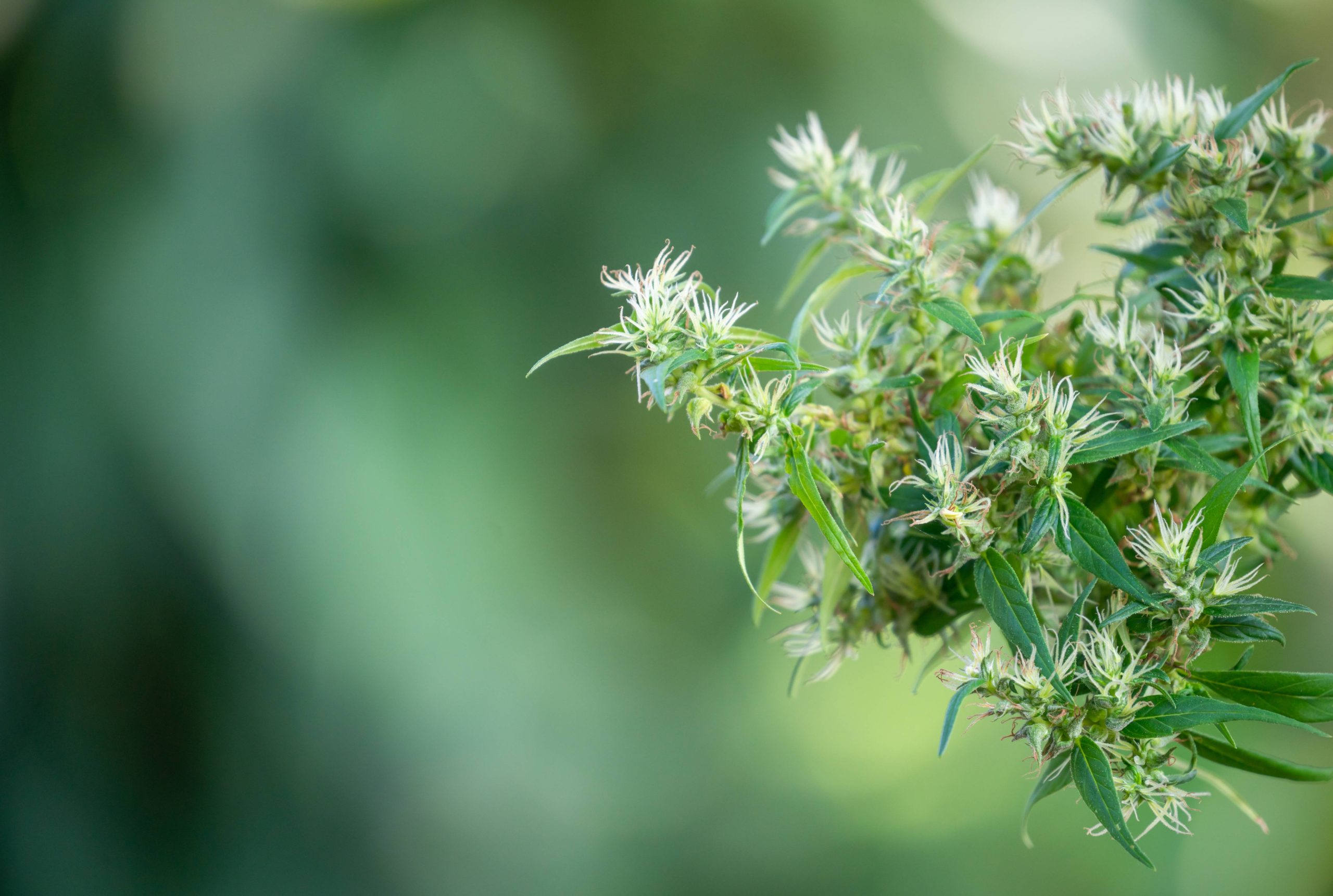
Take a close look at a cannabis bud and you’ll notice more than dense flower and sparkling trichomes. Small, pointed leaves often extend from the buds, sometimes covered in a frosty coating that almost resembles sugar.
These are known as cannabis sugar leaves, and they play an interesting role in the plant’s development.
Unlike the large fan leaves commonly associated with cannabis, sugar leaves grow directly among the flowers. They also contain resin-producing trichomes, making them useful for more than simply supporting the plant.
Understanding these tiny leaves can help explain why cannabis flower looks the way it does and what happens during trimming and processing.
What Are Cannabis Sugar Leaves?
Sugar leaves are small leaves that develop within and around cannabis flowers during the flowering stage.
Their name comes from their appearance. Many develop a visible coating of trichomes that makes them look as though someone sprinkled sugar across their surfaces.
These trichomes produce and store cannabinoids and terpenes.
Because sugar leaves grow so close to the flower, they often contain considerably more resin than the plant’s larger fan leaves.
However, their cannabinoid concentrations generally remain lower than those of the most resin-rich flower structures.
Sugar Leaves vs. Fan Leaves
Although both are part of the same plant, sugar leaves and fan leaves serve different roles.
Sugar Leaves
- Grow within and around developing buds
- Usually appear small and narrow
- Often contain visible trichomes
- May remain partially attached to finished flower
- Can become part of the material collected during trimming
Fan Leaves
- Grow larger and extend outward from branches
- Capture light for photosynthesis
- Typically contain much less visible resin
- Help support overall plant growth
- Are commonly removed during harvesting and trimming
The distinction becomes especially noticeable when comparing a mature flowering branch with a young cannabis plant.
Why Do Sugar Leaves Have Trichomes?
Trichomes are specialized structures that produce and store many of the compounds associated with cannabis.
These include cannabinoids and aromatic terpenes.
However, trichomes also have biological functions for the plant itself. Researchers have investigated how these structures may contribute to protection against environmental stressors and certain pests.
Sugar leaves grow near developing flowers, where glandular trichomes can become particularly abundant.
As a result, their surfaces often develop the sparkling appearance associated with resin-rich cannabis.
Why Do Growers Trim Sugar Leaves?
Once cultivators harvest cannabis, they typically remove much of the excess leafy material surrounding the buds.
This process is known as trimming.
Growers may remove sugar leaves for several reasons.
First, trimming creates a more uniform appearance. Removing protruding leaves makes the flower’s structure easier to see.
Additionally, excessive leafy material can affect the flower’s texture and smoking characteristics.
Careful trimming also helps growers prepare flower for drying, curing, and packaging.
However, not every producer trims flower to the same degree.
Some leave more sugar leaves attached, particularly when those leaves have substantial trichome coverage.
Do Sugar Leaves Contain THC?
Yes, sugar leaves can contain THC and other cannabinoids.
Their glandular trichomes produce cannabinoid-rich resin, although concentrations vary depending on genetics, cultivation, maturity, and other factors.
Nevertheless, sugar leaves generally contain less cannabinoid-rich resin than the most productive parts of mature cannabis flowers.
Therefore, consumers shouldn’t assume that a bud with more visible sugar leaves automatically has higher potency.
Laboratory testing remains the best way to evaluate cannabinoid content.
What Happens to Sugar Leaves After Trimming?
Growers don’t necessarily discard every sugar leaf they remove.
Because these leaves contain trichomes, producers may collect them as part of the cannabis material commonly called trim.
Depending on the material’s quality and applicable processing requirements, manufacturers may use trim to produce:
- Cannabis extracts
- Hash
- Infused products
- Certain pre-roll formulations
However, different manufacturers use different starting materials.
For example, some brands specifically advertise whole-flower pre-rolls, while others may use processed flower material.
Understanding those distinctions can help consumers interpret product descriptions more accurately.
Does More Sugar Leaf Mean Better Cannabis?
Not necessarily.
Although sugar leaves can contain cannabinoids and terpenes, their presence alone doesn’t determine flower quality.
A heavily trimmed bud may have excellent cannabinoid and terpene content.
Likewise, flower with more visible sugar leaves isn’t automatically stronger or fresher.
Instead, consider the complete product:
- Genetics
- Cannabinoid profile
- Terpene information
- Freshness
- Trichome development
- Cultivation practices
- Drying and curing
These characteristics provide a more complete picture than trimming style alone.
What Does Research Say About Sugar Leaves?
The University of Nevada, Reno’s Cooperative Extension identifies sugar leaves as the small leaves growing within cannabis flowers. Its educational publication explains that their trichome covering gives them a sugar-coated appearance and that growers sometimes harvest them for their cannabinoid and terpene content.
University of Nevada, Reno
For more information, read the university’s guide to cannabis plant anatomy.
This botanical explanation helps distinguish sugar leaves from fan leaves and the flower structures surrounding them.
Why Cannabis Anatomy Matters
Learning about sugar leaves provides another way to understand how cannabis plants develop.
The flower isn’t one uniform structure. Instead, it contains several specialized parts that contribute to growth, reproduction, and resin production.
Understanding those structures can help explain differences in flower appearance, trimming, and processing.
For more articles about cannabis cultivation, trichomes, genetics, and flower quality, visit the Orange County Cannabis Co. educational blog.
Final Thoughts on Cannabis Sugar Leaves
Cannabis sugar leaves may be small, but they play a meaningful role in the structure of cannabis flowers.
Their trichome-covered surfaces contribute to the frosty appearance associated with mature buds. Meanwhile, their cannabinoid and terpene content makes them potentially useful during concentrate and infused-product manufacturing.
However, sugar leaves alone don’t determine flower potency or quality.
The next time you examine a cannabis bud, take a closer look at the small leaves surrounding it. They’re another example of how much complexity exists within the cannabis plant.
At Orange County Cannabis Co., we believe understanding these details helps consumers look beyond appearance and make more informed choices.