
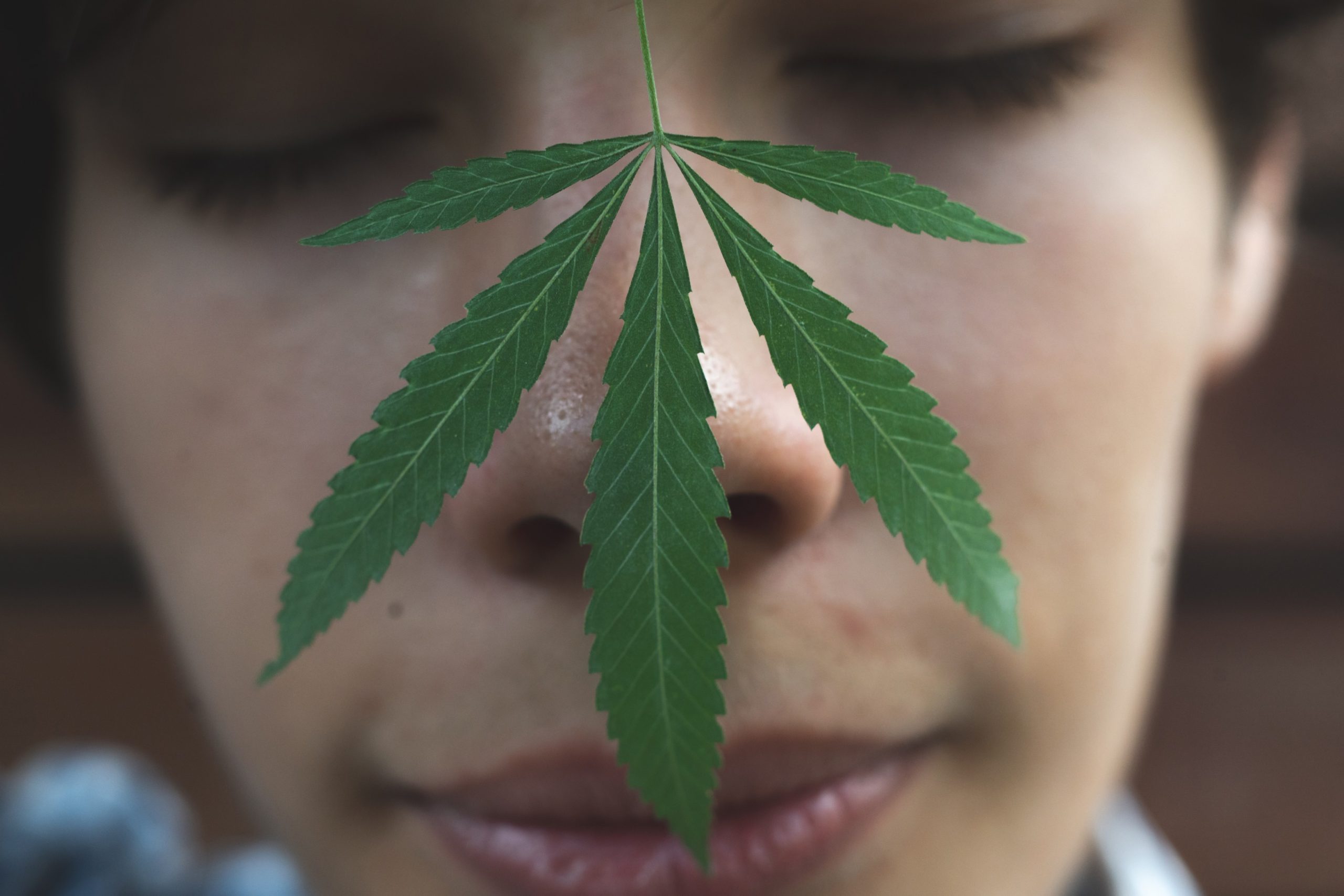
Red or bloodshot eyes are one of the most recognizable effects associated with cannabis. For some people, the change is barely noticeable. For others, cannabis red eyes can appear shortly after consumption and become fairly obvious.
But what’s actually happening?
A common assumption is that cannabis smoke simply irritates the eyes. Smoke certainly can cause irritation, but it doesn’t fully explain the effect. THC can also influence circulation and blood vessels, which helps explain why red eyes can happen with cannabis products that don’t involve smoking at all.
Here’s what the science tells us.
Why Does Cannabis Make Your Eyes Red?
The redness primarily relates to changes in the blood vessels around the eyes.
THC can produce vasodilation, meaning certain blood vessels widen. As those vessels expand and blood flow changes, the small vessels visible in the whites of the eyes can become more noticeable.
Research has documented vasodilation as one of cannabis’s acute ocular effects.
That’s why someone can experience bloodshot eyes after consuming cannabis even if they never inhaled smoke.
Is Cannabis Smoke the Cause?
Not necessarily.
Smoke can irritate the eyes, so sitting in a smoky environment may certainly contribute to redness or discomfort. However, it isn’t the only explanation.
Someone who consumes an edible can still develop red eyes.
Someone using a tincture may experience them too.
The physiological response to THC can occur regardless of whether cannabis was smoked, eaten, or consumed another way.
That distinction is useful because it separates smoke irritation from the circulatory effects associated with THC.
What Does THC Have to Do With It?
THC is the primary psychoactive cannabinoid in cannabis, and researchers have studied its effects on the eye for decades.
One particularly well-documented effect involves intraocular pressure, or pressure inside the eye.
Clinical research has found temporary reductions in intraocular pressure following THC administration. For example, one controlled study found that a 5 mg sublingual THC dose temporarily lowered intraocular pressure, while CBD did not produce the same reduction.
More recent research also recognizes reduced intraocular pressure and vasodilation among the known short-term ocular effects associated with cannabis.
This doesn’t mean cannabis should be viewed as an eye treatment. Rather, it helps researchers understand the physiological changes that can occur after THC consumption.
Do Redder Eyes Mean You’re More High?
No.
Eye redness isn’t a reliable measurement of how intoxicated someone is.
People respond differently to THC, and visible redness can vary based on individual physiology, dose, tolerance, environment, and other factors.
Research involving THC-positive individuals has found red eyes to be common, but physiological signs did not necessarily track neatly with measured THC concentration.
So, extremely red eyes don’t automatically mean someone consumed an unusually large amount of cannabis.
Likewise, clear-looking eyes don’t necessarily mean cannabis isn’t affecting someone.
Can Edibles Make Your Eyes Red?
Yes.
Because the effect isn’t exclusively caused by smoke, consuming cannabis orally can still lead to eye redness.
However, the timing may differ.
Inhaled cannabis generally produces effects relatively quickly, while edibles require digestion and liver metabolism before their effects become noticeable.
Therefore, red eyes from an edible may appear later than they would after smoking or vaping.
This is another example of why consumption method matters when understanding how cannabis affects the body.
You can explore more guides about cannabis consumption and product formats through the Orange County Cannabis Co. cannabis education blog.
Why Do Some People Get Red Eyes More Than Others?
Cannabis doesn’t affect everyone identically.
One person might develop noticeable redness after a relatively small amount of THC, while another person’s eyes may barely change.
Several factors may contribute, including:
- Individual sensitivity to THC
- Dose
- Tolerance
- Consumption method
- Environmental irritation
- Personal eye sensitivity
As a result, comparing your reaction with someone else’s isn’t particularly useful.
Your body’s response is more important than whether your experience matches another person’s.
Does CBD Cause the Same Effect?
THC and CBD don’t affect the eye in exactly the same way.
In a small randomized crossover study involving patients with ocular hypertension or early glaucoma, researchers found that a low dose of THC temporarily reduced intraocular pressure. CBD did not produce the same effect; at the higher CBD dose tested, researchers observed a temporary increase in pressure.
That doesn’t mean consumers should use cannabinoids to manipulate eye pressure. Instead, it highlights an important point: different cannabinoids can produce different physiological effects.
Cannabis is more complicated than treating THC and CBD as interchangeable compounds.
What Does an Outside Source Say?
Healthline’s overview of cannabis’s effects on the body similarly explains that bloodshot eyes can occur because cannabis causes blood vessels in the eyes to expand and fill with more blood.
Read Healthline’s overview of cannabis and the body
This circulatory explanation is why red eyes aren’t limited to people who smoke cannabis.
Are Cannabis Red Eyes Dangerous?
Temporary redness associated with cannabis is generally discussed as an acute effect rather than proof that something is wrong with the eye.
However, persistent redness, significant pain, vision changes, injury, or other unusual eye symptoms shouldn’t automatically be blamed on cannabis.
Those symptoms can have many causes, so someone experiencing concerning or persistent eye problems should seek appropriate medical care.
Cannabis also shouldn’t be used as a substitute for prescribed glaucoma or other eye treatments. Although THC can temporarily affect intraocular pressure, research does not establish routine cannabis use as a replacement for standard ophthalmic treatment.
Final Thoughts on Cannabis Red Eyes
Cannabis red eyes aren’t simply the result of smoke getting into your eyes.
THC can influence blood vessels and circulation, making the small vessels in the whites of the eyes more visible. That’s also why red eyes can occur after edibles, tinctures, and other smoke-free cannabis products.
Still, everyone reacts differently. Redness doesn’t reliably tell you how much THC someone consumed, how potent their product was, or how intoxicated they are.
Understanding effects like these is another reminder that cannabis interacts with the body in more ways than we can see—and that cannabinoids, dosage, consumption method, and individual biology all matter.
At Orange County Cannabis Co., our goal is to make those effects easier to understand so consumers can approach cannabis with better information.