
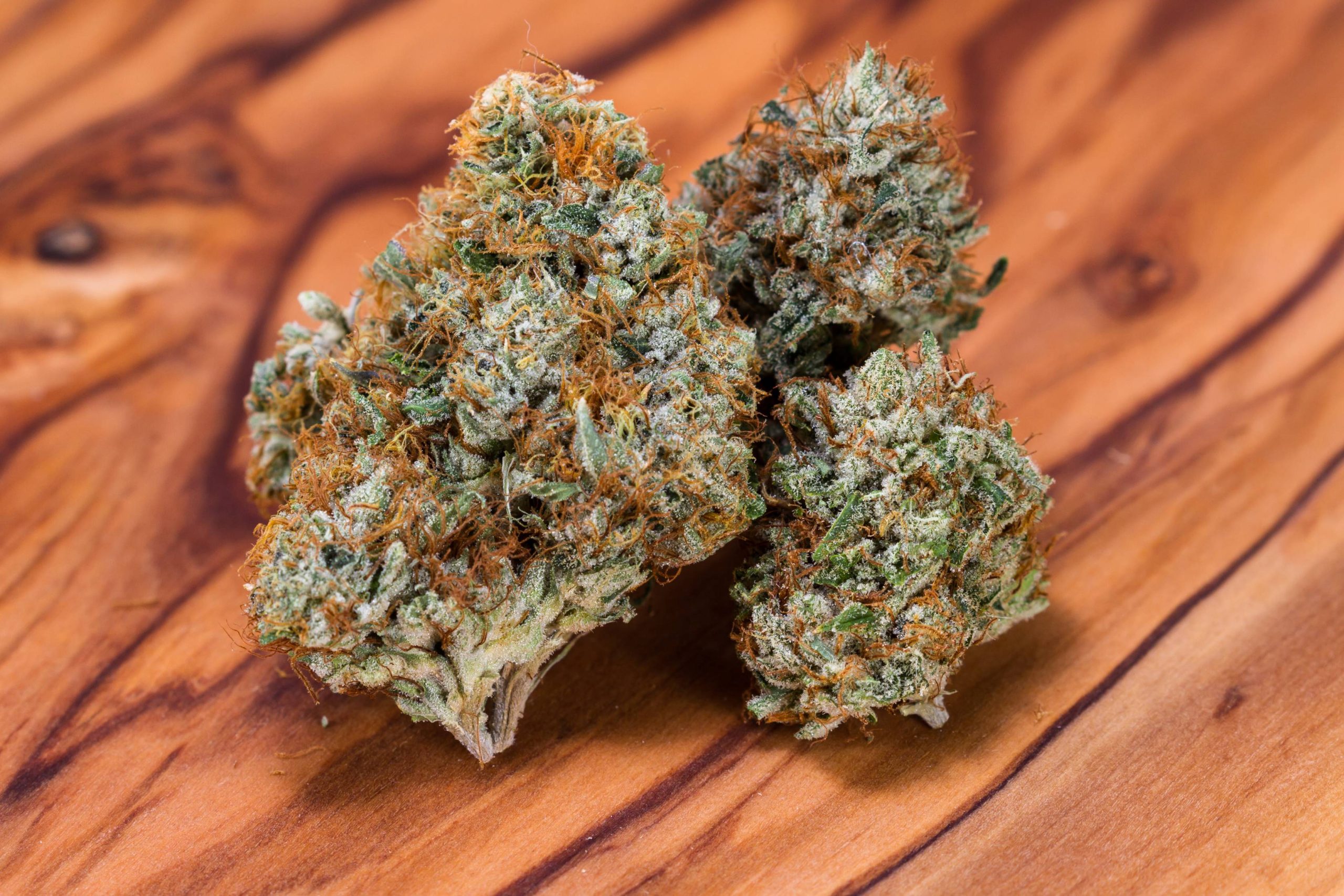
Take a close look at cannabis flower and you’ll often notice thin, hair-like strands weaving through the buds. Some are white, while others appear orange, reddish, or brown.
These colorful strands are commonly called cannabis pistils.
Although they’re one of the most recognizable features of cannabis flower, many consumers don’t know what they do or why their appearance changes.
You may have even heard that orange hairs indicate stronger cannabis. However, the relationship between pistil color, plant maturity, and potency is more complicated than that.
Here’s what these structures actually are and why they matter.
What Are Cannabis Pistils?
In everyday cannabis terminology, pistils refer to the thin, hair-like structures visible on female cannabis flowers.
Botanically, the visible hairs are more precisely called stigmas, which form part of the pistil.
A pistil is the female reproductive structure of a flower. It includes the stigma, style, and ovary.
In cannabis, the stigmas extend from small floral structures and help capture pollen during reproduction.
These strands are especially noticeable during flowering, when they emerge from developing buds.
Why Does Cannabis Have Pistils?
Cannabis pistils play an important role in plant reproduction.
The stigma provides a surface that can capture pollen released by male flowers.
When compatible pollen reaches the stigma, fertilization may occur, allowing the female flower to develop a seed.
However, commercial cannabis cultivation often focuses on producing unfertilized female flowers.
Growers commonly prevent pollination because seedless flower is generally preferred for many adult-use cannabis products.
Even when a plant isn’t pollinated, its stigmas remain visible as part of normal flower development.
Why Are Cannabis Pistils White at First?
During early flowering, newly emerging stigmas often appear white or pale cream.
Their light coloration reflects their developmental stage and the characteristics of the floral tissue.
As flowers continue growing, additional stigmas may emerge.
Consequently, a developing bud can contain both newer white strands and older strands that have begun changing color.
This mixture is normal and doesn’t automatically indicate a problem.
Why Do Cannabis Pistils Turn Orange?
As cannabis flowers mature, stigmas can change from white to orange, red, or brown.
These changes are associated with aging and alterations in the pigments and tissues of the stigmas.
However, maturation isn’t the only factor that can affect their appearance.
Environmental conditions, physical handling, and other forms of stress may also influence how quickly stigmas discolor.
For example, a flower may develop darker stigmas before the rest of the plant has reached its intended harvest stage.
Therefore, orange pistils aren’t a precise biological clock.
Do Orange Pistils Mean Cannabis Is Ready to Harvest?
Not necessarily.
Cultivators sometimes observe pistil appearance when evaluating flower development.
However, relying entirely on pistil color can be misleading.
Different cultivars develop at different rates, and environmental conditions can influence how their stigmas appear.
Additionally, flowers on the same plant may mature unevenly.
Growers generally consider multiple characteristics when evaluating harvest readiness, including overall flower development, plant health, genetics, and resin gland appearance.
Pistil color provides context, but it isn’t a definitive measurement.
Do More Orange Hairs Mean Stronger Cannabis?
No.
The number or color of visible stigmas doesn’t directly measure THC concentration.
Cannabinoids such as THC are produced primarily in glandular trichomes, not in the pistil hairs themselves.
A flower with numerous bright orange strands isn’t automatically more potent than one with fewer visible hairs.
Similarly, a flower with mostly white stigmas isn’t necessarily low in cannabinoids.
Reliable potency information comes from laboratory cannabinoid testing.
Cannabis Pistils vs. Trichomes: What’s the Difference?
Pistils and trichomes are two different structures that people often notice on cannabis flower.
Pistils and stigmas are associated with the plant’s reproductive structures.
Glandular trichomes are specialized structures that produce and store many of the cannabinoids and terpenes found in cannabis resin.
Under magnification, trichomes may resemble tiny stalks with rounded heads.
Stigmas, by contrast, look like longer, thread-like strands extending from the flower.
Both contribute to the recognizable appearance of cannabis buds, but they serve different biological functions.
For a closer look at resin glands, read our guide to cannabis trichome colors and what they mean.
Can Cannabis Pistils Be Different Colors?
Yes.
Cannabis stigmas can appear in several shades, including:
- White
- Cream
- Yellow
- Orange
- Red
- Brown
The colors visible on finished flower depend on the cultivar, developmental stage, and post-harvest handling.
For example, drying and curing may change the appearance of floral tissues.
As a result, packaged cannabis flower may look different from the same plant immediately before harvest.
These color differences don’t automatically indicate superior or inferior quality.
Do All Cannabis Flowers Have Pistils?
Female cannabis flowers normally develop pistils, but the visibility of their stigmas can vary.
Some flowers display numerous long strands, while others have shorter or less noticeable ones.
Male cannabis flowers, on the other hand, generally produce pollen-bearing structures rather than the same prominent stigmas found on female flowers.
Cannabis plants can also develop variations in reproductive expression, including flowers containing both male and female reproductive structures.
Therefore, the appearance of reproductive structures can provide useful information about plant development.
What Does Scientific Research Say?
Botanical research has examined the reproductive structures of Cannabis sativa, including flower anatomy, sex expression, and pollination.
These studies help explain why stigmas develop, how they participate in reproduction, and why reproductive structures vary between cannabis plants.
For additional scientific background, explore the National Library of Medicine’s research on cannabis flower anatomy and reproduction.
This resource provides access to research literature rather than a single study.
Can Pistil Color Tell You Whether Cannabis Is Fresh?
Not reliably.
Although pistil appearance can change during flower development and post-harvest processing, color alone doesn’t establish freshness.
A product’s condition depends on multiple factors, including drying, curing, packaging, storage, and time.
For example, a properly stored flower may retain visible orange stigmas without that color revealing exactly when it was harvested.
Likewise, darker stigmas don’t automatically mean the product is old.
Consumers should consider the product’s overall condition and available testing information instead of relying on one visual characteristic.
Why Cannabis Pistils Matter
Understanding cannabis pistils provides another way to appreciate the plant’s biology.
These structures aren’t simply decorative hairs.
They are part of the flower’s reproductive system and help explain how cannabis plants develop seeds.
Their appearance also changes throughout flowering, creating some of the familiar colors seen in finished cannabis buds.
However, those visual characteristics shouldn’t be mistaken for precise indicators of potency or quality.
Final Thoughts on Cannabis Pistils
Cannabis pistils are reproductive structures found in female cannabis flowers, while the colorful hairs commonly called pistils are more precisely known as stigmas.
These strands help capture pollen and can change from white to orange, red, or brown as flowers develop.
However, pistil color alone cannot reliably determine THC concentration, harvest readiness, or product freshness.
At Orange County Cannabis Co., we believe understanding the science behind cannabis helps consumers appreciate the plant beyond its appearance and make more informed choices.